-
Nutanix Volume Groups on AHV Explained
Read the post: Nutanix Volume Groups on AHV ExplainedUnderstand when to use Nutanix Volume Groups, how direct attachment differs from iSCSI, and where shared-disk applications fit.
More posts
-
Nutanix Objects WORM, Object Lock, and Legal Hold Explained
A practical explanation of immutability controls in Nutanix Objects and how WORM, retention dates, versioning, and legal holds differ.
-
Nutanix Files Access-Based Enumeration: Hide What Users Cannot Access
How Access-Based Enumeration improves the Nutanix Files user experience by hiding SMB folders a user does not have permission to open.
-
Discovering Nutanix: Nutanix Unified Storage (NUS)
What Nutanix Unified Storage actually consists of today — Files, Objects, and Volumes — plus Data Lens, tiering, and how NUS is licensed and…
-
Securing Nutanix API Access: Service Accounts, Keys, and Least Privilege
Why automation should not authenticate as a human, and how Prism Central service accounts, API keys, and authorization policies enforce least privilege.
-
Filtering, Pagination, and Projections: Querying the Nutanix API Efficiently
How to use OData query options in the Nutanix v4 API to filter, sort, page, and trim responses instead of pulling everything and processing…
-
Asynchronous Tasks and ETags: Making Safe Writes with the Nutanix v4 API
Why an HTTP 202 from the Nutanix v4 API does not mean the work is finished, and how ETags and request identifiers protect concurrent…
-
Nutanix API v3 vs v4: What Changed and How to Plan a Migration
A comparison of the Nutanix v3 and v4 Prism Central APIs, and a staged approach to migrating existing automation without rewriting everything at once.
-
Getting Started with the Nutanix v4 REST APIs
A practical introduction to the Nutanix v4 REST APIs: namespaces, request structure, authentication, and how to make your first working call.
-
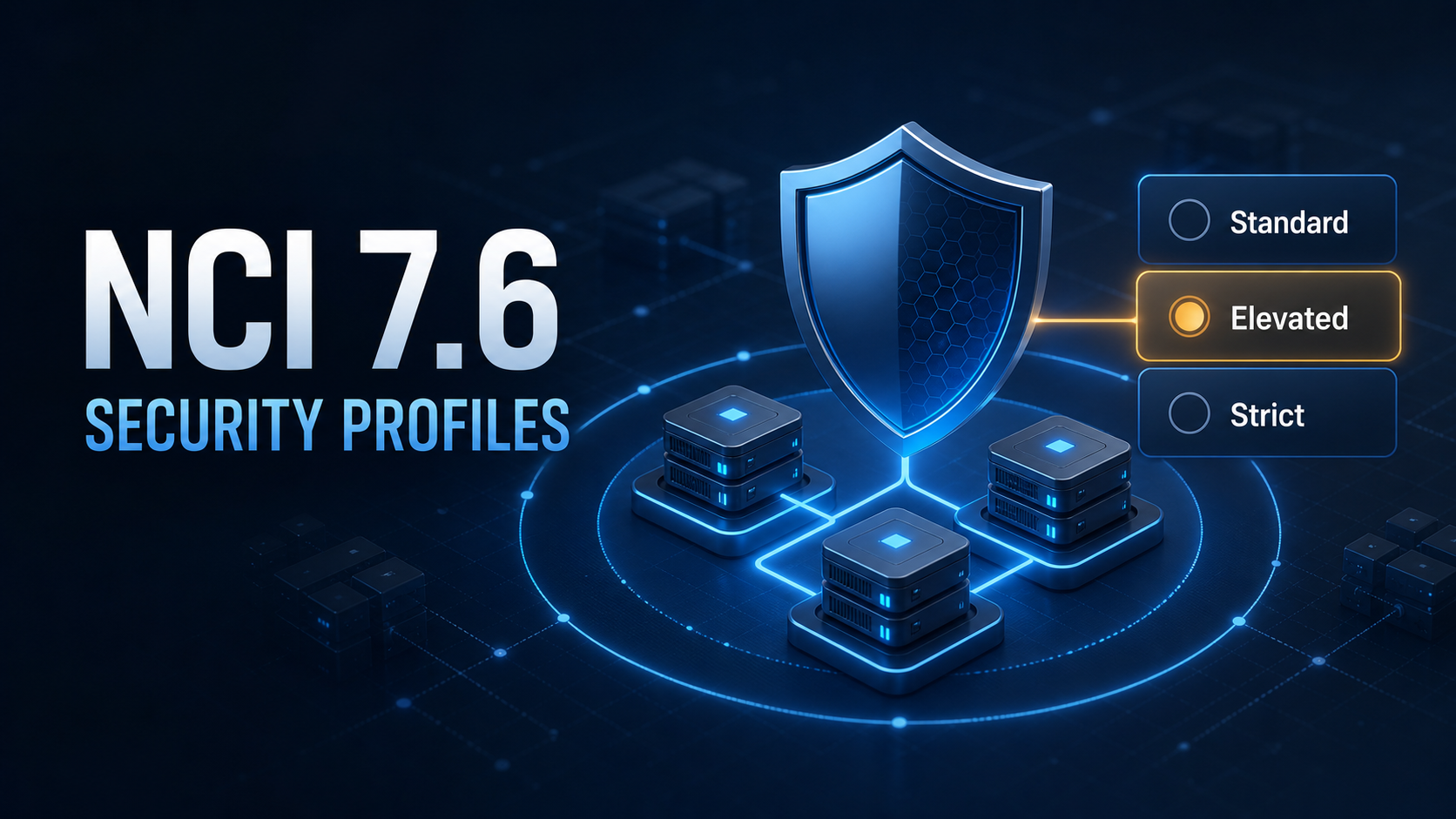
NCI 7.6 Security Profiles Simplify Cluster Hardening
NCI 7.6 introduces Nutanix Security Profiles, giving administrators three predefined hardening postures with centralized application, drift detection, and automated remediation across AOS and AHV.